What a Hot Jupiter Taught Me About Research
My first project on binary stars using speckle interferometry was a crash course in how science can actually work (that project even won us an award at the Washington State Science & Engineering Fair). And this second one on exoplanet transits taught me something equally valuable: how science sometimes doesn’t go as planned.
Science Badges and Smiles
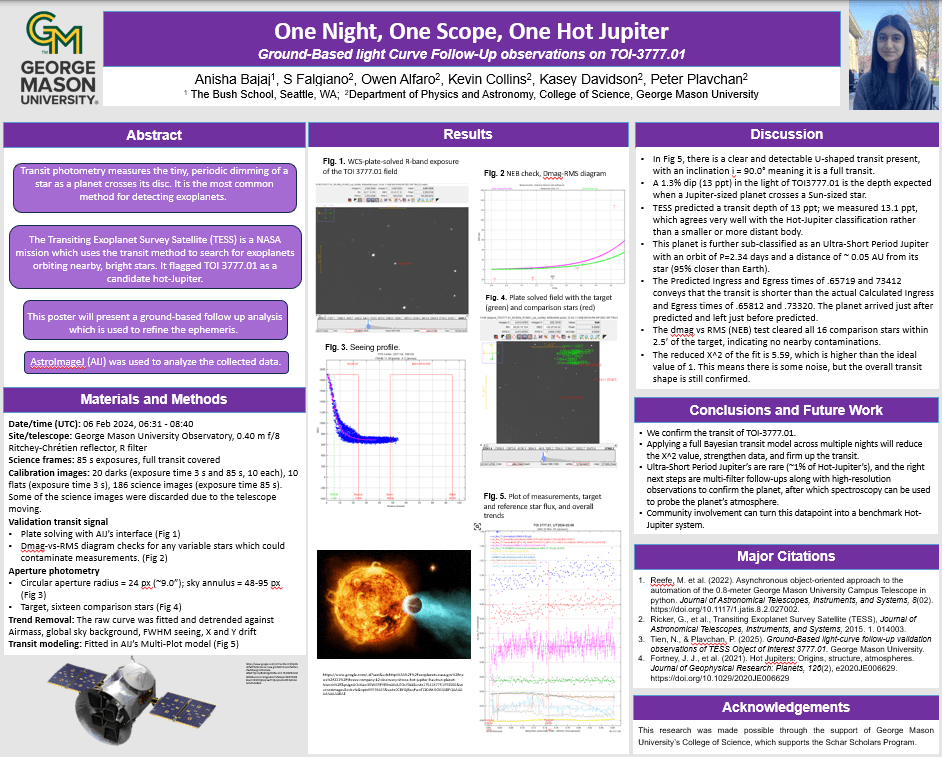
On paper, the goal was simple: confirm whether TOI (TESS object of Interest) 3777.01, a candidate hot Jupiter flagged by NASA’s TESS satellite, was the real deal. All we had to do was point a telescope at the star during the predicted transit window and watch for a tiny dip in its brightness.
Sounds easy, right? IT WASN’T.
We collected 186 exposures over a few hours using George Mason University’s telescope. With AstroImageJ (a popular astronomy based software tool), we processed the images, calibrated everything, and watched the light curve slowly take shape. And sure enough, we saw a dip. The signal was there. This whole process took around 2 weeks.
But then came the problem. The night’s atmosphere was terrible. The stars were blurred, and to make matters worse, one of the star's neighbors was only 2 arcseconds away, practically sitting on top of it in our images. Their light merged together, making it impossible to know which star was actually dimming.
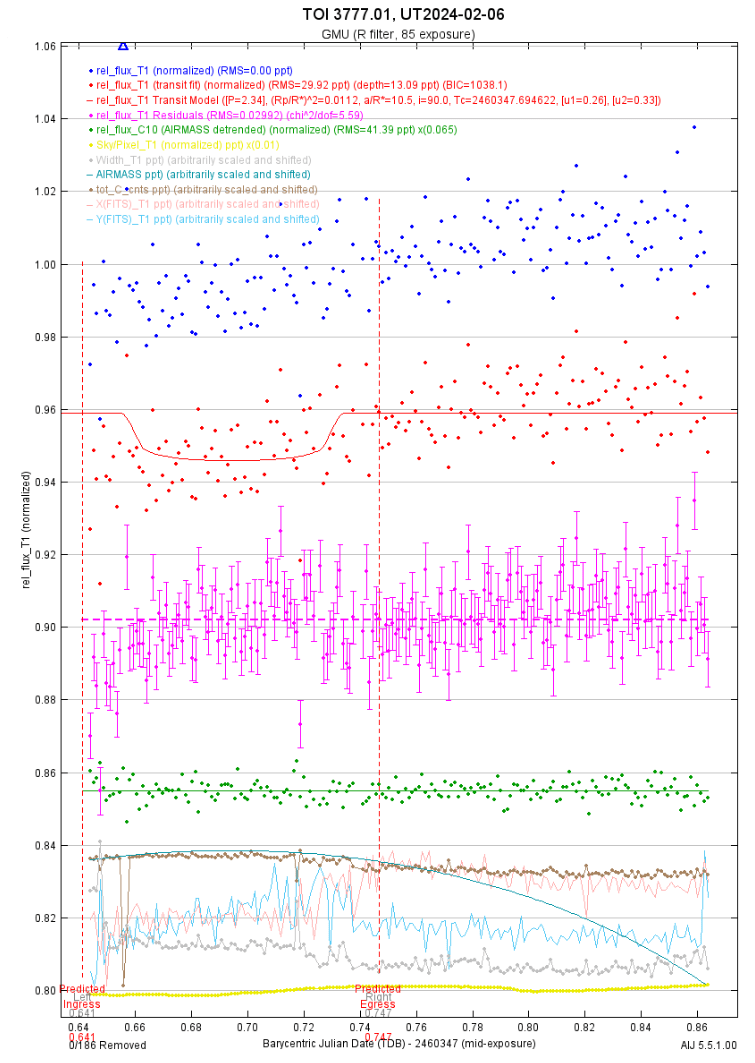
This is the part of research people rarely talk about: you can have all the right data, all the right tools, and still end up with ambiguity.
Why I Still Count It as a Win
Even though the results were inconclusive, the project was far from a failure. In fact, it was the opposite. I learned how to navigate real-world problems like poor seeing conditions, source blending, and noisy data. I learned to explain not just what the data showed, but also what its limits were.
And in the end, this project still earned recognition — I was awarded at a local competition hosted by George Mason University. It wasn’t because the results were perfect, but because the process was real, and the science was honest.
The Bigger Picture
My two projects now tell different sides of the same story. The speckle interferometry project showed me the excitement of pulling out crisp, definitive results about binary stars. This exoplanet transit project showed me the opposite: the challenges of ambiguity, and the patience it takes to accept “we don’t know… yet.”
And honestly? That balance is pretty much what science is. Some days, the data gives you exactly what you were hoping for. Other days, it just hands you more questions.
Either way, it’s always worth the chase.