When we look at stars through a telescope from Earth, the atmosphere makes them look wobbly and fuzzy. Speckle interferometry fixes this by using super-fast images and smart processing to sharpen the view—so astronomers can discover if what looks like one star is actually two orbiting each other!
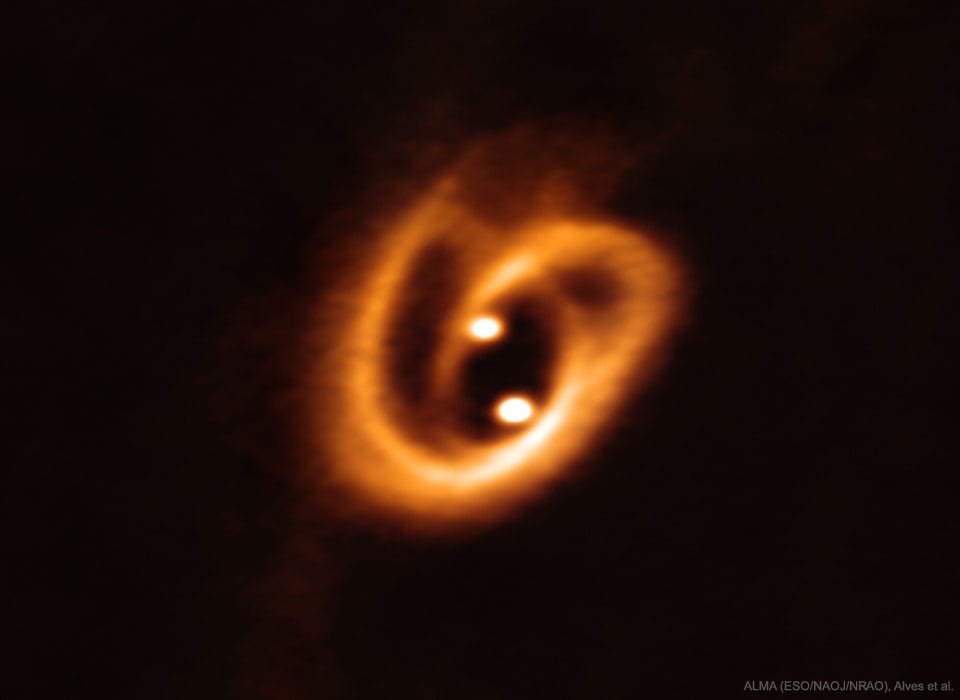
ALMA telescope image of binary stars using speckle interferometry, revealing orbital motion in detail. | Credit: NASA
Spectroscopy
Spectroscopy is like reading a barcode in light. When starlight is split into colors, dark or bright lines appear where specific elements absorb or emit light. Astronomers use these “fingerprints” to unravel the temperature, elements, motion, and magnetic fields of stars and planets—even across light-years.
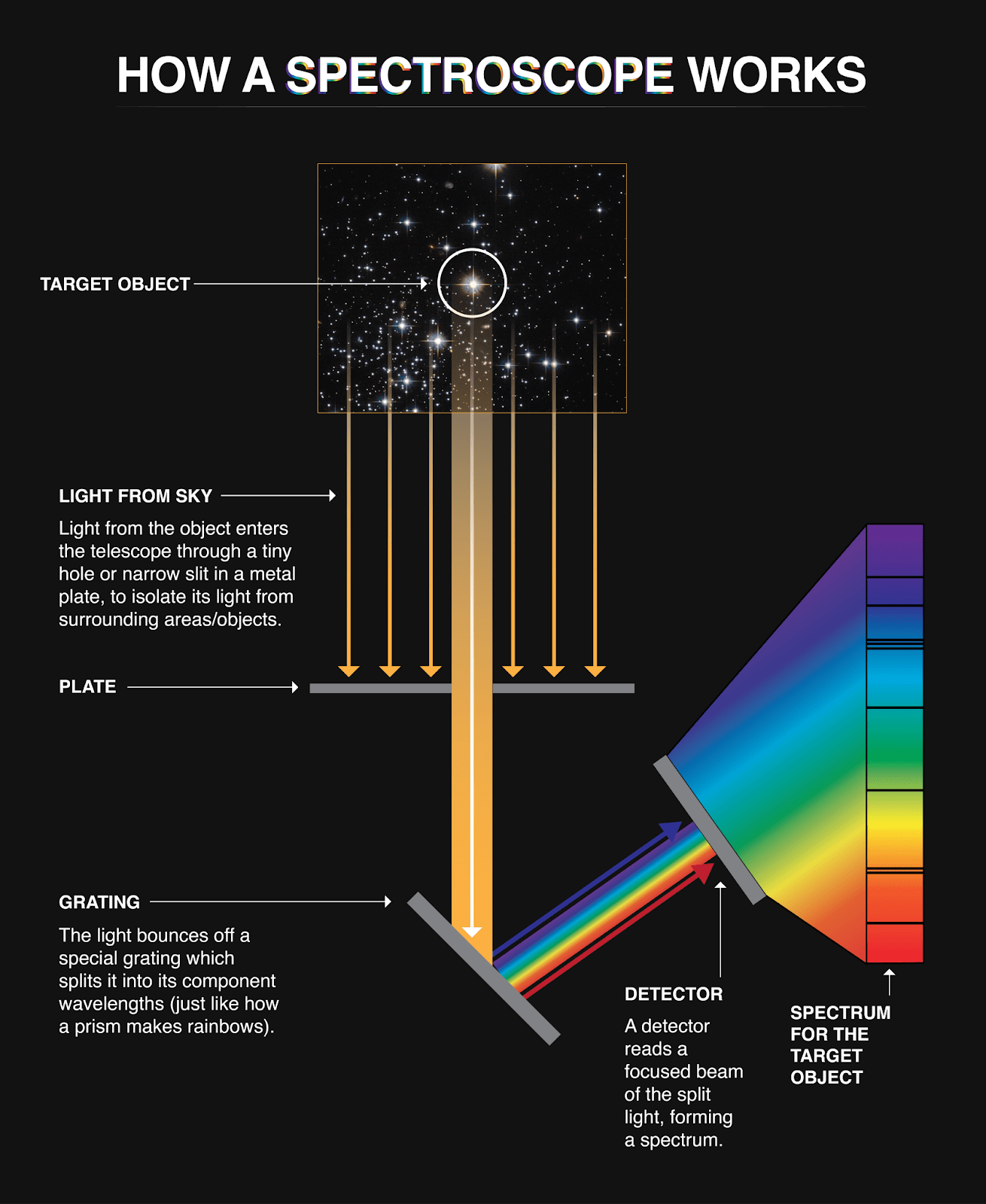
Infographic explaining how a spectroscope splits light into a spectrum to analyze stars and galaxies. | Credit: NASA