Transit photometry watches for tiny dips in a star’s brightness when a planet crosses in front of it. That dip—the U-shaped dip in a light curve—reveals the planet’s size and orbit. NASA’s Kepler and TESS missions have used this technique to discover thousands of planets!
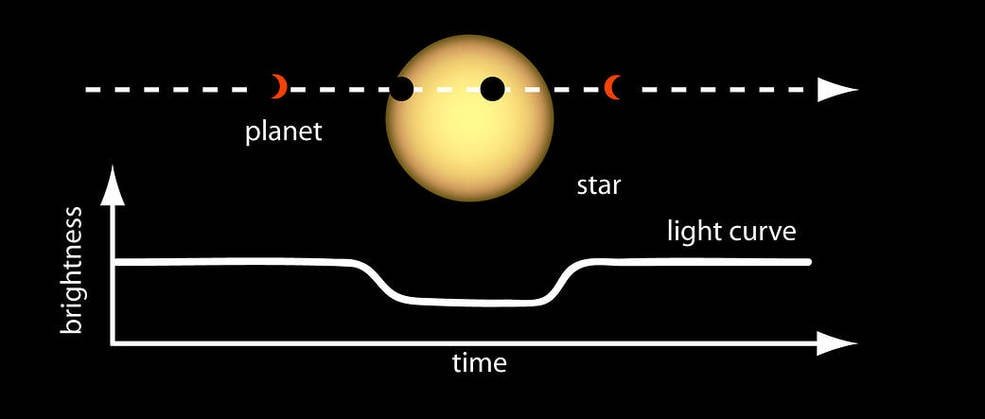
Infographic explaining how a spectroscope splits light into a spectrum to analyze stars and galaxies. | Credit: NASA
What Kind of Telescope Should I Buy?
NASA’s Tips for Young Stargazers
Start with binoculars before jumping into telescopes. NASA’s Night Sky Network emphasizes binoculars are often a better first step for learning the sky—portable, intuitive, and great value for exploring the Moon, star clusters, and constellations.
Join a Star Party hosted by local astronomy club, it’s a fantastic way to learn, try out different telescopes firsthand, and discover which type suits you best. You can learn more, borrow telescopes, and find out what kind of scope would be suitable. Becoming a member of a club is one of the best and most enjoyable ways to learn your way around the night sky.
Advance to Citizen Science by joining NASA researchers and discover the secrets of the universe, search for life elsewhere, and protect and improve life on Earth and in space.
Good luck and clear skies!
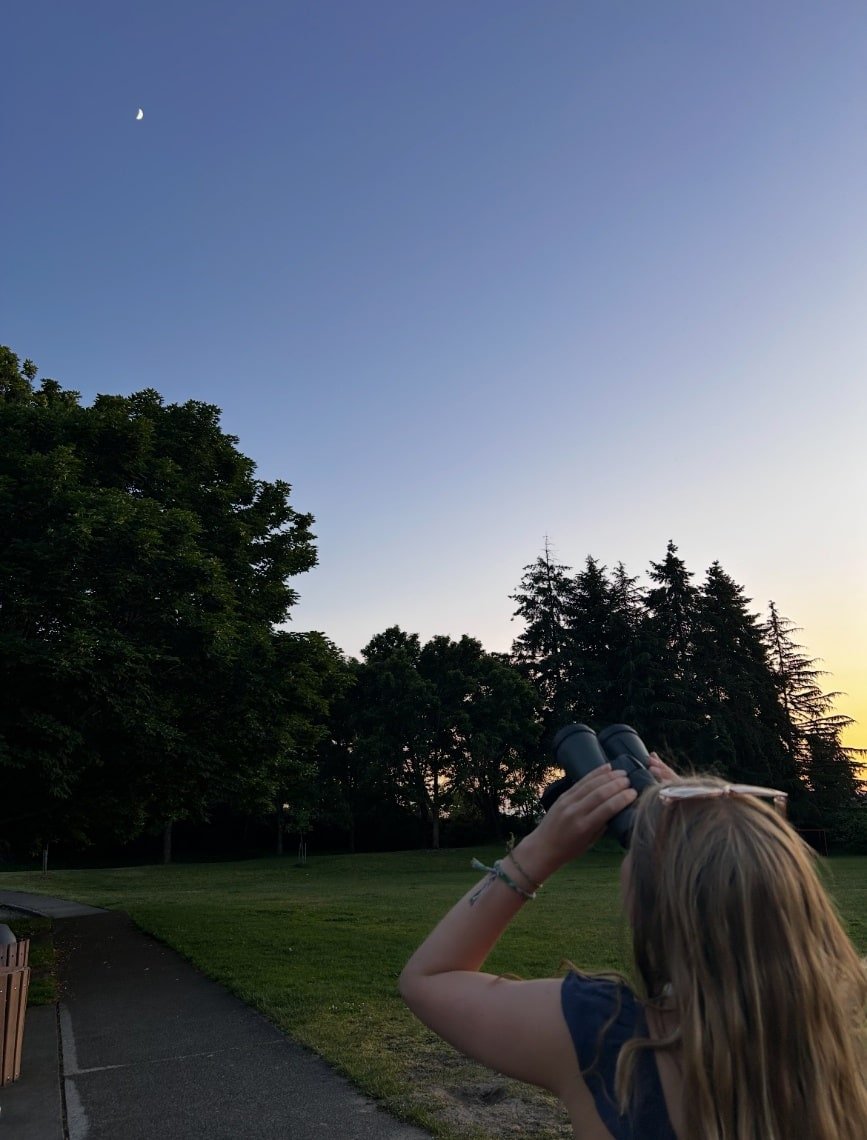
A young stargazer observes the moon using binoculars during a summer evening skywatch. | Credit: Anisha Bajaj